Using Authority Without Breaking Trust
Jan 28, 2026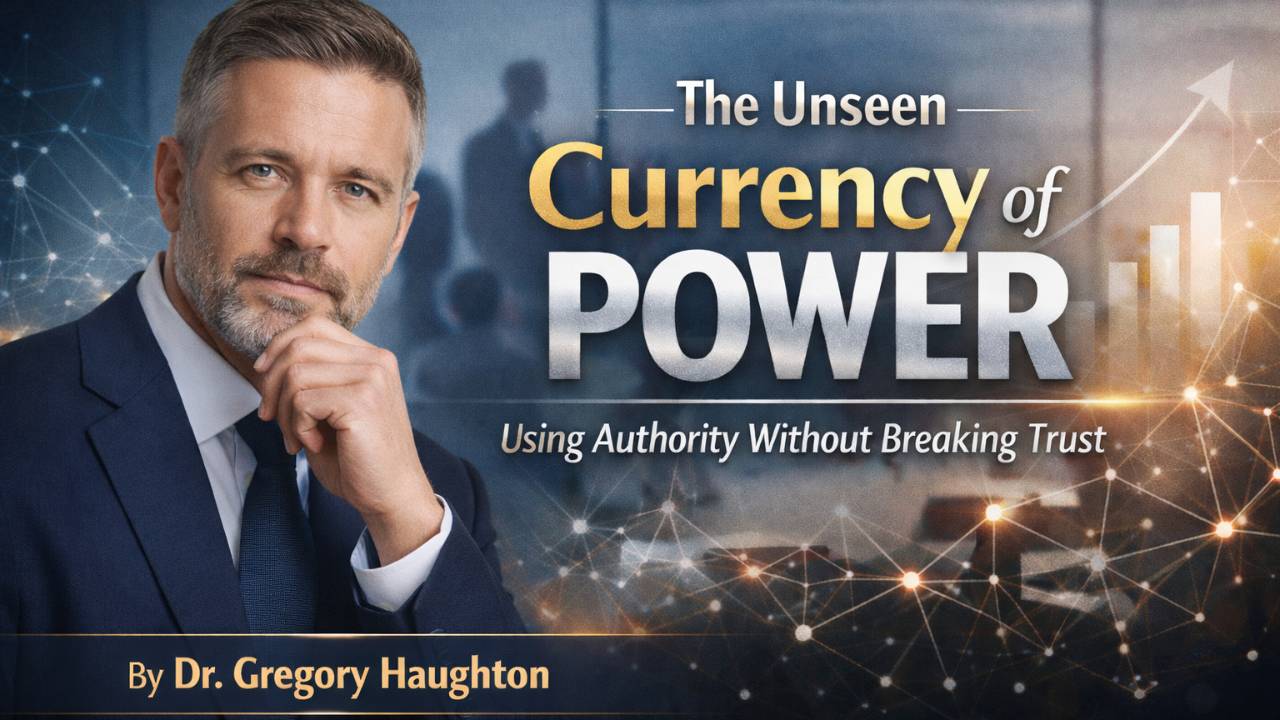
Power is not a choice; it is an inheritance. It is vested in you the moment you accept responsibility for a team, a vision, or a critical outcome. But the possession of power is not what defines a leader. Leadership is forged in the crucible of pressure, and its true measure is the discipline with which that power is wielded when everything is on the line.
I have spent my life in high-stakes arenas, from the Olympic track to the executive suite, and I have learned that power’s true character is revealed not in moments of calm, but in moments of strain. It is in the tight corners and under the bright lights that a leader’s instincts take over, and in a single interaction, they can either fortify trust or begin its silent erosion. Pressure does not build character; it reveals the one you have been cultivating all along.
When the stakes are high, a leader’s world naturally constricts. Patience wears thin, focus narrows to the bottom line, and the gravitational pull of positional authority becomes almost irresistible. It feels efficient to command, to control, to demand. And it works. The task gets done. The deadline is met. And then, a heavy silence descends upon the room.
That silence is the most misunderstood metric in leadership. It is not alignment. It is not an agreement. It is the sound of self-protection. It is the quiet hum of people calculating what is safe to say and what must be withheld. This is the precise moment leadership begins to fracture, not with a bang, but with a whisper. When authority is used to compel compliance instead of earning commitment, the damage is subtle but certain, leading to the slow decay of engagement, trust, and ultimately, performance.
This is why our entire understanding of power must be reframed. It is not a tool for control, but a mantle of stewardship. This is the foundational principle we instill in leaders at the Haughton Mentoring Group (HMG). Your authority is not a license to dominate outcomes; it is a profound responsibility to regulate the emotional environment so that your people can think clearly, act decisively, and perform sustainably. This duty is never more critical than when your team is already stretched thin.
Under pressure, people are not just managing tasks; they are carrying a heavy emotional load. A leader who is blind to this reality will inevitably become another source of that burden. A public correction that lands as humiliation, an urgent demand that creates anxiety, or a detached professionalism that feels like abandonment, these are not the marks of strength. They are the reflexes of insecurity. A truly strong leader does not amplify pressure; they absorb it.
This is the essence of what I call “regulated authority”, a core competency we develop within the HMG Leadership Mentorium™. It is the learned ability to remain grounded, clear, and composed when chaos is rising. This is not a passive stance; it is the highest form of leadership discipline. It is the choice to become the stabilizing force in a volatile system.
This regulated authority is not an abstract theory; it is a set of observable behaviors. It is using your power to create psychological safety, not by lowering the bar, but by making it safe to speak the truth when the stakes are highest. It is using your power to provide clarity, to absorb the crushing weight of complexity, and to offer a simple, anchoring focus in return. It is knowing how to interrupt the destructive spiral of emotional escalation with a single, deliberate pause. And it is choosing, in every corrective conversation, to coach rather than to crush, to uphold the standard while honoring the person.
Over time, this disciplined practice cultivates a different kind of authority altogether. It is quiet, steady, and deeply credible. The most effective leaders I know never need to remind you they are in charge. Their power is felt in their consistency, their fairness, and their unwavering self-control. People follow them not because they have to, but because they trust them. This is the leadership we build at HMG, where emotional intelligence and self-mastery are not soft skills, but the very bedrock of accountability and performance.
So, I ask you to reflect not on the power you hold, but on the wake it leaves. When pressure mounts, does your presence calm the waters or churn them? Do people leave your office feeling enlarged or diminished? Is your authority a shield for your team, or a shield for your ego?
Power is, and always will be, a part of your leadership journey. The legacy you leave will be determined by how you carry it.
That is not soft leadership. That is strength under control.
Follow new blog posts and updates!
Join our mailing list to receive the latest blog posts and updates from Dr. Greg.
Don't worry, your information will not be shared.
We hate SPAM. We will never sell your information, for any reason.