What truly makes a leader effective?
Jan 21, 2026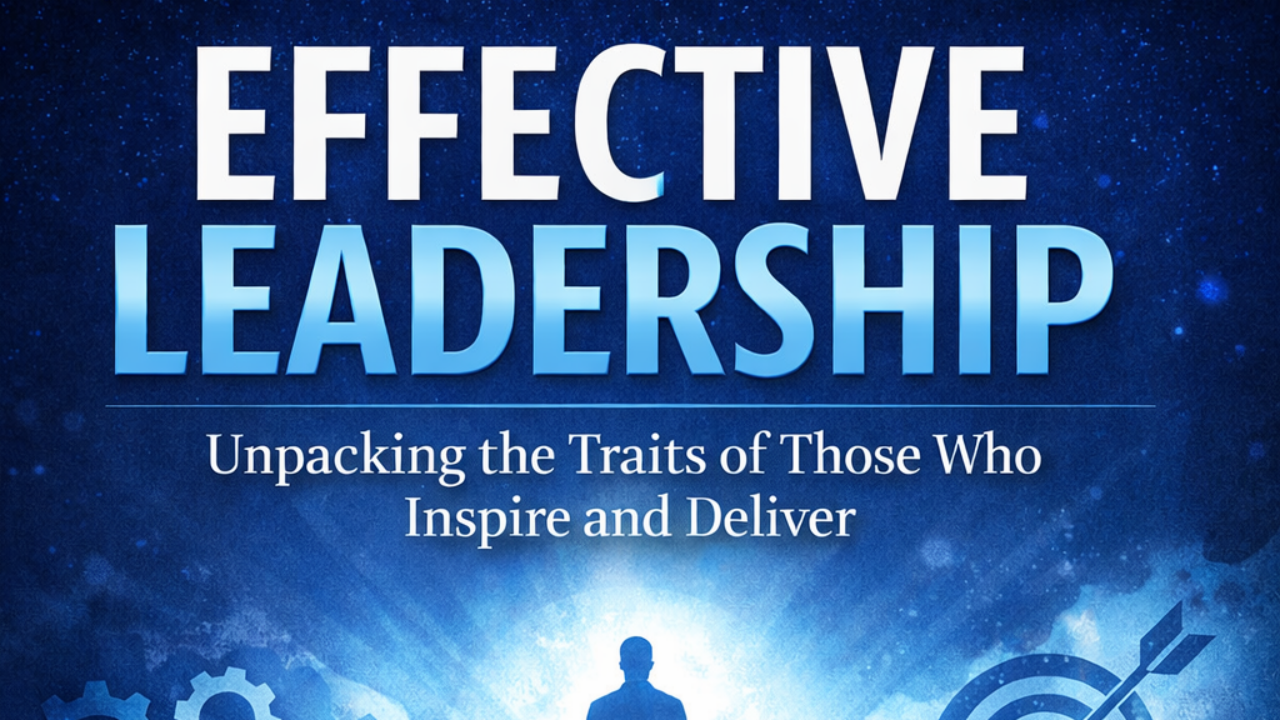
By Dr. Gregory Haughton
In a world defined by constant change and disruption, one factor consistently separates organizations that thrive from those that struggle: effective leadership. After years as an Olympic athlete, mentor, and leadership scholar, I’m often asked what truly makes a leader effective. Is it charisma? Technical skill? Authority? Research and experience point to a deeper truth: effective leadership is the ability to consistently regulate oneself, make sound decisions under pressure, and influence others through clarity, character, and discipline, an inside-out process that defines the HMG Leadership philosophy.
Effective leadership begins with the inner core. The most influential leaders are not defined by their knowledge or technical skills alone, but by the strength of their internal foundation. Character, values, and a balanced self-concept create consistency. When a leader’s inner core is strong, words and actions align, credibility increases, and trust becomes sustainable.
As pressure increases, inner strength alone is not enough. Effective leaders must develop emotional and learning agility, the ability to adapt, learn, and navigate complexity. Rigid leaders struggle in fast-moving environments, while adaptable leaders continue to grow. This agility is reinforced by humility and vulnerability. Leaders who admit mistakes, seek feedback, and learn from others demonstrate confidence, not weakness.
Purpose and relationships anchor leadership effectiveness. Leaders guided by purpose build trust-based relationships rooted in service and accountability, not transactions. These leaders mobilize people toward goals that extend beyond short-term results and create long-term commitment.
We see this in leaders like Tim Cook, whose steady, emotionally mature leadership at Apple proved that influence does not require being the loudest voice in the room. Clarity, composure, and consistency often create the greatest impact. Research supports this. The Center for Creative Leadership identifies qualities such as self-awareness, integrity, communication, courage, and resilience as consistently present in effective leaders. These traits don’t operate in isolation; they reinforce one another, shaping leaders who can perform and sustain trust over time.
Yet knowing the traits is not the same as developing them. Leadership is not a fixed trait; it is a disciplined practice. That belief led me to design the Six-Stage Leadership Mentorium™, a structured system for developing judgment, closing performance gaps, and stabilizing leadership behavior under pressure. Like elite athletic performance, leadership mastery unfolds through deliberate, progressive stages.
Across industries and leadership styles, one common thread remains. The most effective leaders share a relentless commitment to growth. They understand that leadership is not a destination; it is a lifelong process of learning, refinement, and self-mastery. If you want to increase your leadership impact, start by strengthening your inner core, cultivating essential leadership qualities, and committing to structured development. When leaders do this work, they don’t just improve performance; they create environments where others can grow, perform, and succeed.
Follow new blog posts and updates!
Join our mailing list to receive the latest blog posts and updates from Dr. Greg.
Don't worry, your information will not be shared.
We hate SPAM. We will never sell your information, for any reason.